Narrow Stairs? Colney Hatch Moving Solutions
Posted on 10/06/2026

If you have ever stood at the bottom of a tight staircase with a sofa in your hands and thought, "Right, this is going to be awkward," you already understand the problem this guide is here to solve. Narrow Stairs? Colney Hatch Moving Solutions is about moving homes, flats, and bulky furniture through spaces that are simply not forgiving: steep turns, tight landings, low ceilings, old banisters, and the occasional corridor that feels a bit too cosy for comfort.
In Colney Hatch, that can mean period terraces, purpose-built flats, maisonettes, shared houses, and converted buildings where access is the real challenge, not distance. The good news? With the right planning, the right lifting approach, and a bit of local know-how, narrow stairs do not have to turn moving day into a headache. This article breaks down how the process works, what to prepare, the risks to avoid, and how to make the whole thing calmer from the start.
Why Narrow Stairs? Colney Hatch Moving Solutions Matters
Narrow stairs are not just an inconvenience. They affect timing, safety, equipment choice, and the number of people needed on the job. A move that looks straightforward on paper can become difficult fast if a wardrobe will not turn the corner or a mattress catches on a handrail. That is where proper removal planning earns its keep.
In Colney Hatch, the issue often comes down to property layout. Some flats have compact communal stairwells; some homes have sharp turns between floors; others have staircases with walls on both sides, leaving little room for manoeuvre. Add a fridge, a piano, or a heavy chest of drawers, and you can see why this is a specialist job rather than a simple carrying exercise.
It also matters because damage tends to happen in the same places every time: scuffed walls, cracked corners, strained lifts, chipped furniture, and the occasional bruised ankle. Nobody wants that. Not the customer, not the movers, and definitely not the neighbours who have to step over the chaos on the landing.
For local moves, narrow access can also influence route planning and vehicle parking. A good mover looks at the whole picture: staircase width, turning space, road access, loading distance, and whether it makes more sense to dismantle items before they leave the property. If you are already planning a flat move, it is worth comparing access needs with flat removals in Colney Hatch and the practical support available through local removal services.
Practical takeaway: narrow stairs change the whole move, not just the lifting. The best results come from planning for access first and furniture second.
How Narrow Stairs? Colney Hatch Moving Solutions Works
The process is usually more methodical than people expect. A well-run move through tight stairs starts before anyone picks up a box. The aim is to reduce surprises, because surprises on a staircase are rarely the fun kind.
1. Access is assessed before moving day
Measurements matter. Stair width, landing space, head height, banister position, and any awkward bends all need checking. If an item is too wide to turn upright, it may need to be rotated, protected, or dismantled. Sometimes a quick look is enough. Other times, a more detailed plan is needed. Honestly, it saves a lot of carrying, dropping, and muttering under breath later.
2. Furniture is prepared for the route
Large items may be wrapped, padded, or stripped down into manageable parts. Sofas, beds, wardrobes, and tables are the usual candidates. For example, a bed frame may move more safely after it is broken into sections, while a sofa may need blankets and corner protection to avoid tearing fabric or scraping the stairwell. If you are moving upholstered furniture, it can help to read about sofa care and storage techniques as part of the wider move planning.
3. The right lifting method is chosen
This is where experience shows. Movers do not just lift and hope for the best. They use angles, pauses, controlled rotations, and team communication. One person may guide from below while another steers from above. For especially awkward pieces, a step-by-step carry with resting points is safer than trying to force a one-shot move.
4. Protective materials and safe handling are used
Blankets, wraps, straps, gloves, and floor protection are often part of the job. On narrow stairs, every little contact point matters. A few extra minutes of protection can prevent a repair bill later. Simple as that.
5. The route is kept clear and calm
Clear paths make a huge difference. Hallways, porches, and landings should be cleared of shoes, bags, bicycles, plant pots, and anything else that narrows the route further. It sounds obvious, but during a move, obvious things often get missed because everyone is busy. That is just human nature.
Key Benefits and Practical Advantages
When narrow stairs are handled properly, the gains are obvious. The move feels less frantic, the property stays in better shape, and bulky items are much less likely to get stuck halfway up the staircase with everyone pretending this was planned.
- Less risk of damage: careful handling helps protect walls, banisters, flooring, and furniture finishes.
- Better time control: a planned lift is usually faster than a panic re-route after a failed attempt.
- Safer for everyone: fewer awkward lifts means lower strain and less chance of accidents.
- Improved confidence: you know the move is being handled by people who understand access issues.
- More suitable for tricky items: large sofas, beds, desks, and white goods can be moved with less stress.
There is also a quieter benefit people often overlook: peace of mind. When you know the stairs have been assessed properly, you are not standing on the landing wondering whether the chest of drawers is about to scrape paint off the wall. You can breathe a bit easier. That matters on moving day.
If your move involves a broader home move rather than just one item, the wider process often works best alongside house removals in Colney Hatch or a flexible man and van Colney Hatch service, depending on how much you need to shift.
Who This Is For and When It Makes Sense
This kind of moving support is especially useful if you live or work in a property where access is tight and the furniture is not exactly lightweight. That covers a surprisingly wide group of people.
- Flat residents dealing with compact staircases
- Householders in older properties with narrow internal stairs
- Students moving into shared accommodation with awkward access
- Families relocating bulky furniture from upper floors
- Office teams moving desks, chairs, and storage units through confined routes
- Anyone with a piano, mattress, sofa, or heavy appliance that will not fit safely through a standard stairwell
It also makes sense when time is limited. If you are moving after work, over a weekend, or on a same-day timetable, there is less room for trial and error. A sensible plan matters even more then. If timing is tight, a service like same-day removals in Colney Hatch can be worth considering.
Truth be told, a lot of people only realise they need specialist support once they have already tried moving a heavy item a few feet and felt their shoulders complain. That little moment is usually the warning sign.
Step-by-Step Guidance
Here is the simplest way to approach a move with narrow stairs without turning the day into a slow-motion disaster.
- Measure the access points. Check stair width, landing depth, ceiling height, door frames, and hallway turns. If in doubt, measure twice. It is boring, but useful.
- List the awkward items. Anything large, fragile, heavy, or oddly shaped should be identified early. Sofas, mattresses, wardrobes, mirrors, and freezers are common examples.
- Decide what should be dismantled. If something can be broken down safely, it often should be. This is especially true for beds and flat-pack furniture.
- Clear the route. Move loose items out of the hallway and stairwell. Protect floors if needed.
- Pack by priority. Label boxes clearly and keep essentials separate. The last thing you want is to hunt for the kettle while standing in a pile of tape and bubble wrap.
- Use the right carrying method. Heavy or oversized items should be lifted by trained people using controlled movement, not rushed shortcuts.
- Plan the loading order. The vehicle should be packed so items needed first are accessible, and fragile things are not crushed underneath heavier loads.
- Check the exit and arrival points. Stair issues can happen at both ends of the move, not just the departure address.
A practical tip: if you are moving a bed, mattress, or frame, it is often worth pairing access planning with bed and mattress moving advice so you do not end up wrestling fabric down a winding stairwell at 7:30 in the morning.
Expert Tips for Better Results
Good stair moves are won with small choices. Not dramatic ones. Small, sensible ones.
- Remove obstacles early. Shoes, mats, picture frames, coat stands, and loose hand luggage all become trip hazards in tight spaces.
- Protect corners. Old plaster and paint marks easily, especially on tight bends.
- Use lighter box weights. On stairs, a smaller box that is easy to control is better than a large "strong" box packed too full.
- Keep communication simple. Movers should count lifts, turns, and rests clearly. No shouting across the landing if it can be avoided.
- Plan for resting points. On long staircases, pauses help reduce strain and keep balance steady.
- Think about weather too. Wet shoes, muddy hallways, and slippery steps add avoidable risk. London rain loves bad timing, of course.
In our experience, one of the best signs of a smooth stair move is quiet. Not silence exactly, just less noise, less bumping, fewer hurried instructions. The job feels measured. Calm. That is a good sign.
If you are preparing multiple rooms, broader prep tips can help. Many customers find it useful to review stress-free house moving advice and packing strategies for a smoother move before the removal team arrives.

Common Mistakes to Avoid
Narrow stairs expose poor planning very quickly. These are the mistakes that cause most of the grief.
- Trying to move oversized items without measuring. Hope is not a measurement method.
- Overloading boxes. Heavy boxes on stairs are harder to grip and easier to drop.
- Forcing furniture through a turn. If it does not fit, stop and reassess rather than pushing harder.
- Skipping protection. Unprotected walls and banisters often pay the price.
- Ignoring the landing space. A staircase may be wide enough, but the landing may not be.
- Leaving clutter in the route. One forgotten bag can trip the entire plan.
- Moving in a rush. Speed is not the goal. Control is.
Another common issue is not thinking about the items that need to be moved first and last. If the washing machine has to go out before the sofa comes in, that order needs to be planned, not improvised at the doorway while everyone debates. It happens more often than you would think.
Tools, Resources and Recommendations
The right tools do not magically solve narrow access, but they do make it safer and more manageable. For a small domestic move, the toolkit usually includes more common-sense items than fancy gear.
| Tool or resource | What it helps with | Best used for |
|---|---|---|
| Furniture blankets | Protects surfaces and soft furnishings | Sofas, tables, wardrobes |
| Straps and grips | Improves handling and control | Heavy or awkward loads |
| Floor protection | Reduces scuffs and marks | Hallways, landings, stair edges |
| Protective wrap | Keeps corners and finishes safe | Cabinets, glass, painted surfaces |
| Dismantling tools | Helps reduce item size | Beds, shelving, modular furniture |
| Clear labels | Keeps boxes organised | Room-by-room packing |
Some moves benefit from storage as well. If your items cannot go directly into the new property, or the narrow stairs make same-day unloading impossible for everything, storage in Colney Hatch can buy you time and reduce pressure.
For bulky waste or items that should not come with you, it helps to plan that out before move day. A decluttering pass can genuinely cut the stress in half, and if you want a practical starting point, decluttering before a move is a sensible read.
Law, Compliance, Standards, or Best Practice
For most domestic moves, the main concern is not a legal obstacle so much as safe working practice. That said, professional movers in the UK are generally expected to work in line with basic health and safety duties, careful lifting standards, and reasonable care for property and belongings. If a stairwell is tight, it becomes even more important to avoid rushing, overloading, or using unsafe lifting techniques.
Best practice usually includes proper risk assessment, clear communication, suitable equipment, and moving only what can be handled safely. If an item is too heavy, too large, or too awkward for the access route, it should be dismantled or moved by a safer method. In practical terms, that means the job must be adapted to the building rather than forcing the building to cooperate. Buildings rarely do, to be fair.
If your move involves shared hallways, communal areas, or apartment access, it is also wise to keep noise, obstruction, and damage to a minimum. Residents and neighbours should still be able to pass safely. That is not just courtesy; it is good practice.
For customers who want extra reassurance around handling and procedures, pages such as health and safety policy, insurance and safety, and terms and conditions help set expectations clearly.
Options, Methods, or Comparison Table
There is more than one way to handle a move with narrow stairs. The best option depends on the size of the load, how tight the access is, and how much time you have.
| Method | Best for | Pros | Trade-offs |
|---|---|---|---|
| Manual carry with protection | Smaller furniture and boxes | Flexible, cost-conscious, quick | Less suitable for oversized items |
| Dismantled item move | Beds, wardrobes, modular furniture | Easier through tight turns, safer for walls | Needs time and careful reassembly |
| Specialist heavy-item handling | Pianos, large appliances, bulky sofas | Better control, lower risk | May require more planning and staff |
| Staged move with storage | Complex moves or delayed handover | Reduces pressure on the stairs | Involves extra handling step |
If you are comparing service styles, it can help to look at man with a van options in Colney Hatch alongside more structured removal companies in Colney Hatch. The right fit depends less on marketing and more on the reality of your staircase.
Case Study or Real-World Example
Picture a common Colney Hatch scenario: a first-floor flat with a narrow internal stairwell, a sofa that looked fine in the living room but suddenly seems enormous in the hallway, and a mattress that needs to turn at a landing with only a little breathing room. Nothing unusual. Just a normal moving day with a few complications.
In a situation like that, the best approach is usually to split the move into stages. The team checks the staircase first, removes any loose fittings or obstacles, and protects the route. The bed frame is dismantled. The mattress is wrapped and carried separately. The sofa is measured, angled, and moved with one person guiding the top and another controlling the base. No heroics. No rushing.
What makes the difference is not strength alone. It is patience, route reading, and knowing when to stop and re-angle an item rather than forcing it through. That one decision often saves the stair paint, the furniture corners, and everyone's mood. Moving day can already be a bit much. No need to make it worse.
A similar approach can be especially useful when you are moving from local streets with compact access or planning a route around busier areas. For more local context, readers often find moving from Friern Barnet High Road, removals in N11 and nearby streets, and best moving routes via New Southgate Station helpful for route thinking.
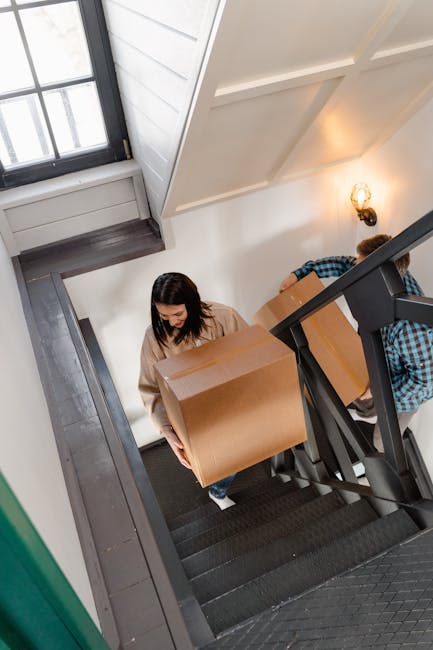
Practical Checklist
Use this checklist before moving day. It is simple, but simple is often what keeps a move on track.
- Measure staircase width and turning points
- Measure large furniture and appliances
- Identify items that need dismantling
- Clear hallways, landings, and entrances
- Protect walls, corners, and floors
- Pack heavy boxes lightly enough to carry safely
- Label fragile and awkward boxes clearly
- Decide which items go first and which come last
- Plan parking and loading access near the property
- Check if storage will be needed for any items
- Review insurance and safety expectations
- Keep a small essentials bag with documents, keys, chargers, and water
If you are moving out of a flat, it may also be worth looking at flat removals in Colney Hatch and, for student moves, student removals Colney Hatch. Different households need slightly different planning, even when the stairs look equally annoying.
Conclusion
Narrow stairs do not have to derail a move. They just demand a better plan, more accurate preparation, and a steadier hand on moving day. Whether you are shifting a sofa, a mattress, a wardrobe, office furniture, or a whole flat's worth of belongings, the key is to treat access as part of the job, not an afterthought.
The best Colney Hatch moves are the ones where the stairwell is respected from the outset: measured properly, protected well, and tackled with the right method. That approach saves time, reduces stress, and helps everyone finish the day with fewer bruises and fewer regrets. Which, let's face it, is a very decent outcome.
Get a free quote today and see how much you can save.
And if you are still in the planning stage, that is perfectly fine. A careful start is usually the difference between a frantic move and one that actually feels manageable. Take a breath. The stairs are narrow, yes, but the solution does not have to be.


